The blank you choose changes how a leather patch reads more than the patch itself does. Same logo, same leather, same laser file, mounted on a stiff structured trucker and then on a soft dad hat, and it looks like two different products. One sits flat and proud on a firm foam panel; the other flexes and can pucker at the edges on a soft crown. Before you argue over patch shape or stitch color, pick the hat category that fits both your patch and the people who will wear it. Here is how the main styles differ and who each one is for.
Structured trucker: the default patch canvas
The structured mid-profile trucker, the category the industry-standard Richardson 112 defined, is the default for a reason. Its front panels are backed with a firm buckram or foam that stands the crown up and gives you a flat, stable surface, while the mesh back keeps the hat cool. That firm front is the best canvas a leather patch can ask for: it holds the patch flat so a laser-engraved logo stays crisp and the edges do not lift. If you are branding a team, a trade, or a retail line and you only want to choose one style, this is it. The chart below places the common categories by how firm and how tall their crowns are, and the structured and foam truckers cluster exactly where a flat patch performs best.
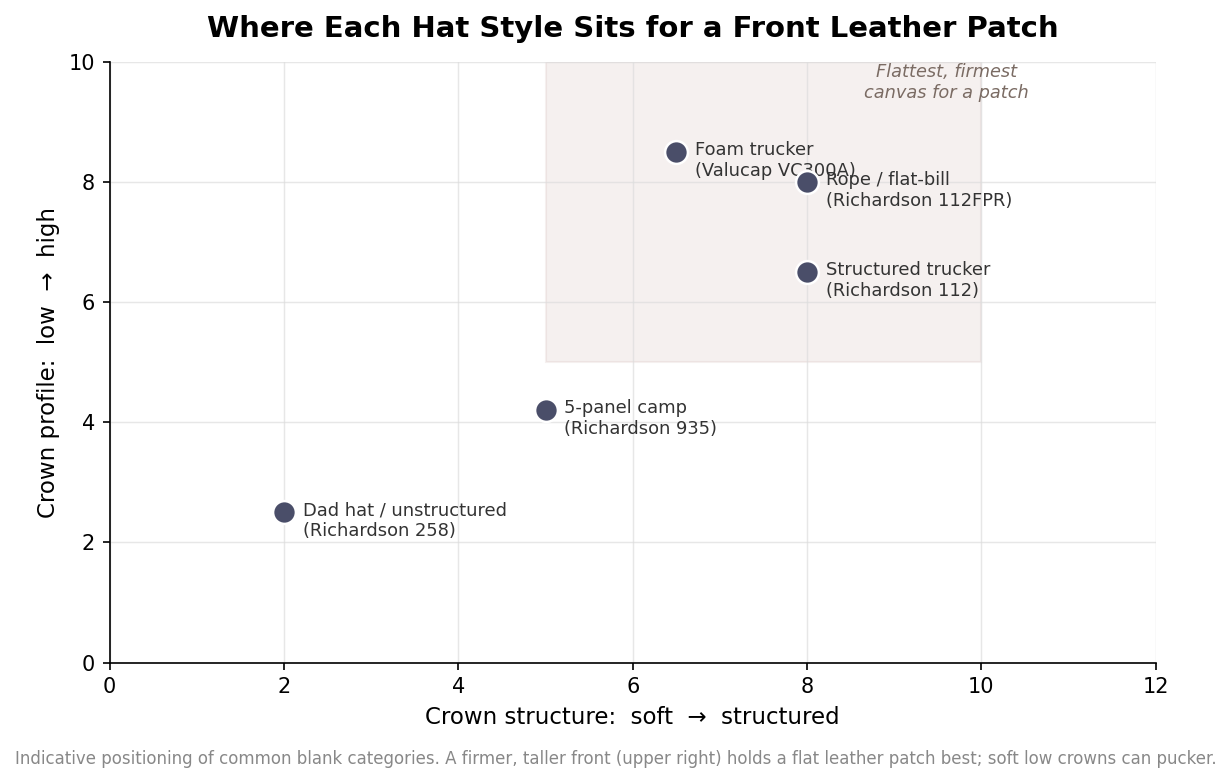
Within this category the choices are mostly about brim and closure, curved versus flat bill and snapback versus strap, none of which change the patch surface much. It is also the safest choice when you are sending a single patch spec to a print shop and want it to sit identically across a large run, because the firm front removes most of the variation that soft crowns introduce from hat to hat.
Foam trucker: the budget and retro option
Foam-front truckers such as the Valucap VC300A or the retro-styled Richardson 113 give you a taller, lighter, more casual crown. The foam front is very forgiving for a patch and reads as vintage or throwback, which suits event giveaways, casual brands, breweries, and anything leaning into a nostalgic look. They are typically the most economical structured option, so they are a strong pick when you are ordering in volume and want the patch to still sit flat without paying for a premium wool-blend crown. The trade is a slightly less refined finish than a firm-front 112.
Dad hats and unstructured six-panels: soft and low-key
An unstructured dad hat like the Richardson 258 has a soft, collapsible crown that hugs the head and sits low, with a curved brim and a relaxed strap closure. It reads casual, vintage, and fashion-forward rather than corporate. The catch for patches is right there in the softness: because the front panel has no stiff backing, a rigid leather patch can pull against a fabric that wants to fold, and larger patches may pucker or lift at the corners over time. Dad hats can absolutely carry a patch, but keep the patch smaller, and know that this style flatters embroidery and small debossed leather tags better than a big flat plate.
Rope hats, flat bills, and five-panels: the outdoor and trend lane
Flat-bill rope hats such as the Richardson 112FPR add a braided rope across the brim and a flat visor, leaning into an outdoor, adventure, and streetwear aesthetic. Five-panel camp caps and performance rope hats push further toward hunting, fishing, and trail use, often in earth tones and camo. Structurally most of these keep a firm enough front to hold a patch well, so the decision here is aesthetic and audience-driven rather than technical: choose them when the crowd skews outdoors, younger, or trend-conscious, and when a curved corporate cap would feel out of place.
Beanies: a different set of rules
A knit beanie like the YP Classics 1501KC or the Sportsman SP15 plays by its own rules because there is no rigid panel at all. A leather patch on a beanie is usually sewn onto the cuff rather than heat-pressed onto a flat front, it moves with the stretch of the knit, and it works best kept small and simple. Beanies extend a patch program into cold-weather and fall lines, and pairing a beanie with a matching trucker is a common way to cover a full season, but treat the beanie patch as a separate spec rather than reusing the exact one built for a structured cap. A patch sized for a flat trucker front will often look oversized once it is riding a folded knit cuff, so scale it down deliberately.
Matching the style to your brand and crowd
Once the structural question is settled, the last constraint is often color. If your brand lives or dies on an exact hat color, your choice of blank narrows fast, because color range varies enormously from one model to the next. A structured trucker platform offers well over a hundred stock colorways, while a niche dad hat or beanie may offer only a handful.
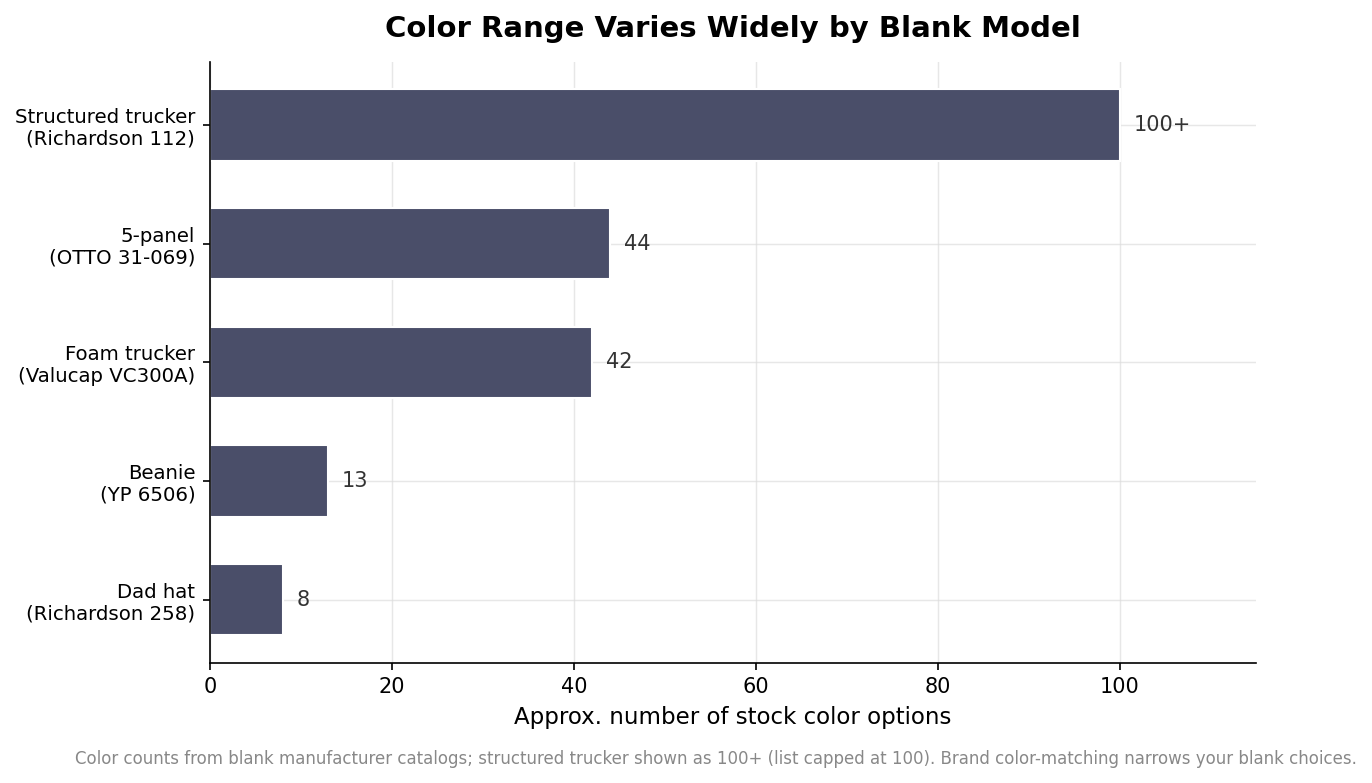
So the practical order of decisions is simple. Start with the crowd and the setting, which points you to a style lane. Confirm the front is firm enough for the patch size you want, favoring structured and foam truckers for anything large and flat. Then check that your target color actually exists in that blank before you commit, since a perfect style in the wrong color is no bargain. Get those three in line and the patch, whatever leather and logo you have chosen, lands the way you pictured it.